February 7, 2026
Schedule
Date:
Time:
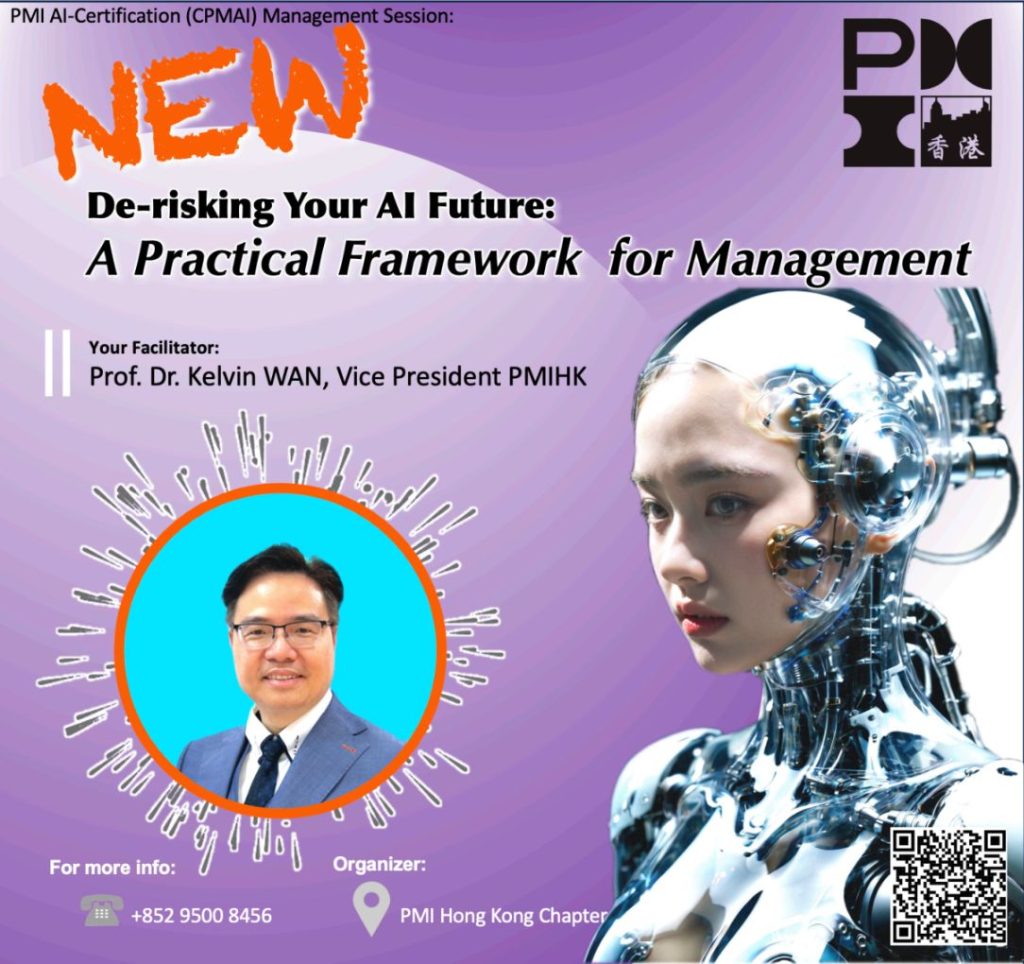
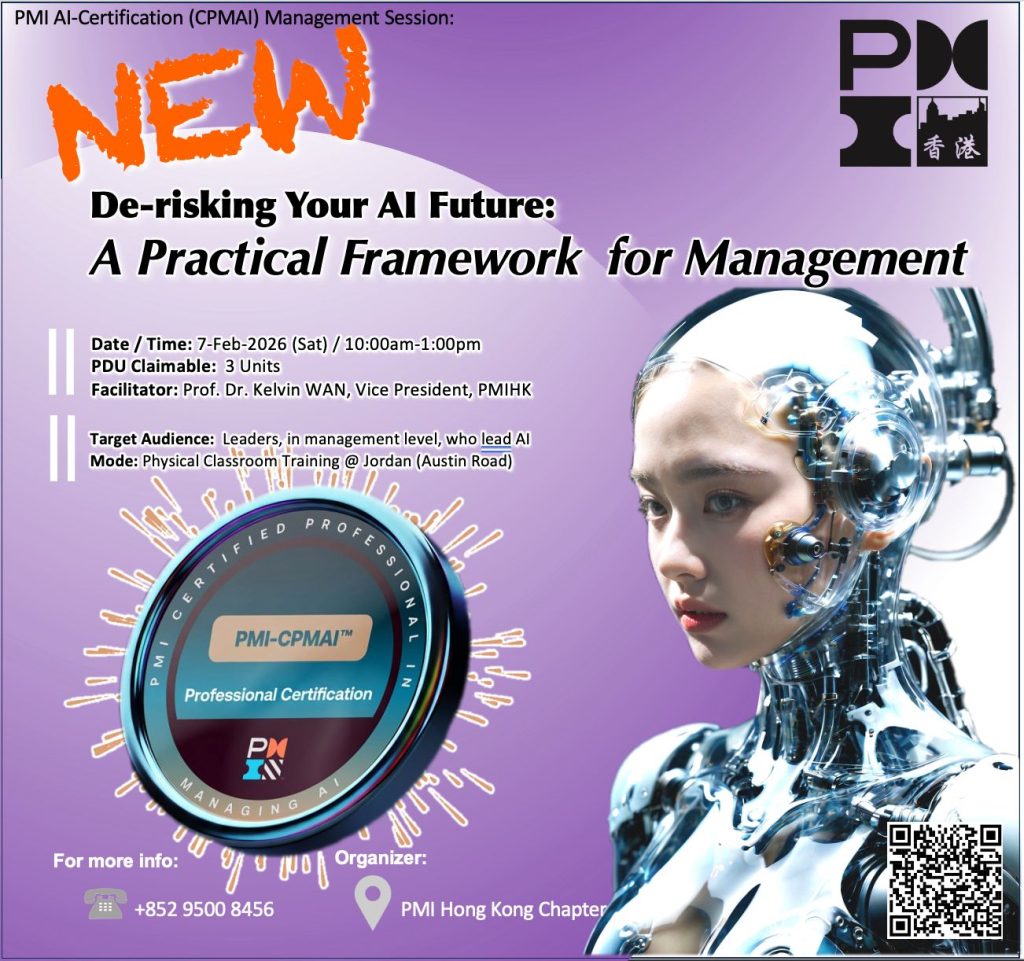
De-risking AI Projects: A Practical Framework for Managers
| Date: | 7 February 2026 |
| Time: | 10:00 – 13:00 |
| Venue: | Hong Kong School of Commerce Rm1, 4/F, 81 Austin Road, Tsim Sha Tsui, Kowloon (Exit C2, Jordan MTR Station) / (Exit F, Austin West Rail Station) |
| PDU: | 3 |
| Instructor: | Prof. Dr. Kelvin WAN, Vice President, PMIHK |
| Fee: | PMIHK Member: HKD1,000 PMIHK First Time Training Joiner: HKD1,000 Non-PMIHK Member: HKD1,500 |
| Note: | Fees above include a set of physical handout |
Half-Day (3-Hour) Management Module
- Background: Program and IT managers are tasked with delivering AI outcomes but attempt to use traditional Agile/Waterfall methods, increasing risk and uncertainty.
- Objective: To equip project and IT managers with a practical, structured understanding of the CPMAI methodology, including its key phases, common risks points, and essential governance checklists.
- Target Audience: IT Directors, Senior Project Managers, Program Managers, Innovation Leads.
- Class Size: Optimal 12 | Max 20
- Prerequisite: Experience managing IT or software development projects.
- Outcome: Participants will be able to navigate the AI project lifecycle, identify critical risk checkpoints, and apply phase-specific “Go/No-Go” criteria to ensure project alignment and viability.
- Core Content:
- Why AI Projects Aren’t Software Projects: The data-centric, iterative reality.
- CPMAI in Practice: Deep Dive into Phases I-III: Business Understanding, Data Understanding, Data Preparation.
- The Art of the Possible: Matching business problems to the “Seven Patterns of AI”.
- Strategic Risk Mitigation in AI Projects: Managing data governance, model drift, and stakeholder expectations.
- Case Study Analysis: Applying CPMAI phases to a real-world project’s challenges.
- Q&A with Consultant-level Facilitator.
Unique Value Proposition: This curriculum is exclusively delivered by our Official Experienced AI Practitioning Facilitator (Options: Professor level / Consultant level / Certified Trainer level), combining global best practices with real-world insight. This is strategic methodology training, not tool-based instruction.